This project is a collaboration to establish a comprehensive understanding of the contaminants that may be entering Port Phillip and Westernport via the estuaries that flow into the bays. RMIT AQUEST is leading the research in partnership with volunteers and government agencies including Melbourne Water and the National Measurement Institute. Volunteers include people from Estuarywatch, the Port Phillip EcoCentre and the Werribee Riverkeeper Association.
Over a 3-year time span samples will be collected from 34 estuaries to build up a picture of the contaminants that are entering the bays. The kinds of contaminants tested for include pesticides, pharmaceuticals and personal care products. Contaminants of concern are chemicals that can cause significant harm to aquatic ecosystems and human and environmental health due to their toxic, persistent, and bio-accumulative properties.
There are a range of sources for these contaminants including households, stormwater, wastewater treatment, industry and agriculture. The rise in population growth and impacts from climate change place aquatic ecosystems under increasing pressure and it’s vital to gauge the potential impacts that contaminants could add to aquatic ecosystems.
Citizen scientists are making a valuable contribution to this research by deploying samplers in their local estuaries and contributing their local knowledge about sampling sites. After a month in the water the passive samplers are then recovered by volunteers and conveyed to the laboratory for exhaustive analysis. The first round of analysis looks for the presence of 450 known chemicals, and this is followed by an in-depth analysis which scans for the presence of over 40,000 different chemicals. This step of the analysis provides the opportunity of detecting new or unexpected contaminants that may be entering waterways. This type of testing is more complex and time consuming and provides a greater level of understanding of potential risks.
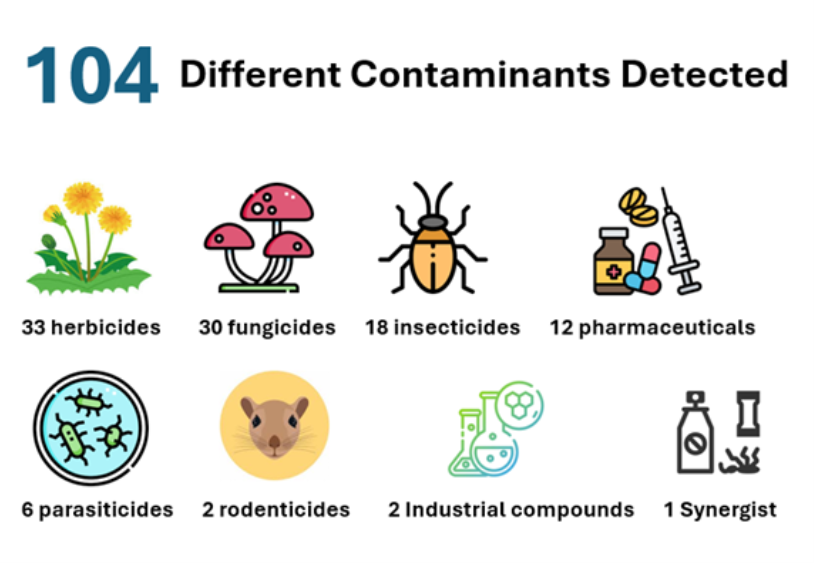
Around 30 volunteers took part in the first rounds of sampling and learned that 104 different contaminants were detected. These were predominantly fungicides and herbicides as shown in the diagram below.