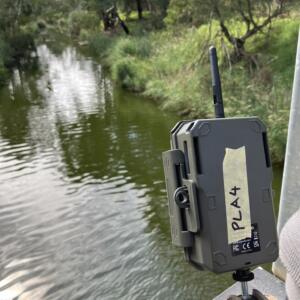
In March and April this year, Bacchus Marsh Platypus Alliance and Werribee River Association trialled new monitoring methods using time-lapse cameras and AI to detect platypuses along the Werribee River. Cameras were programmed to capture an image every four seconds and were left in place for one to two nights at each site, generating an incredible 300,000+ images.
These images were analysed by University of Melbourne researchers using an AI model trained to identify platypus. The model flagged 1,314 potential sightings, which were then carefully checked by volunteers from Bacchus Marsh Platypus Alliance and Werribee River Association.
Thanks to volunteer effort, platypus were confirmed at four of the eight monitoring sites. Platypus were already known to occur at two of these sites — a valuable confirmation that the monitoring approach worked and can support future citizen science projects. At the other two sites, platypus were found in sections of the river impacted by construction and development activity. It’s encouraging to see that despite these challenges, platypus are still persisting!