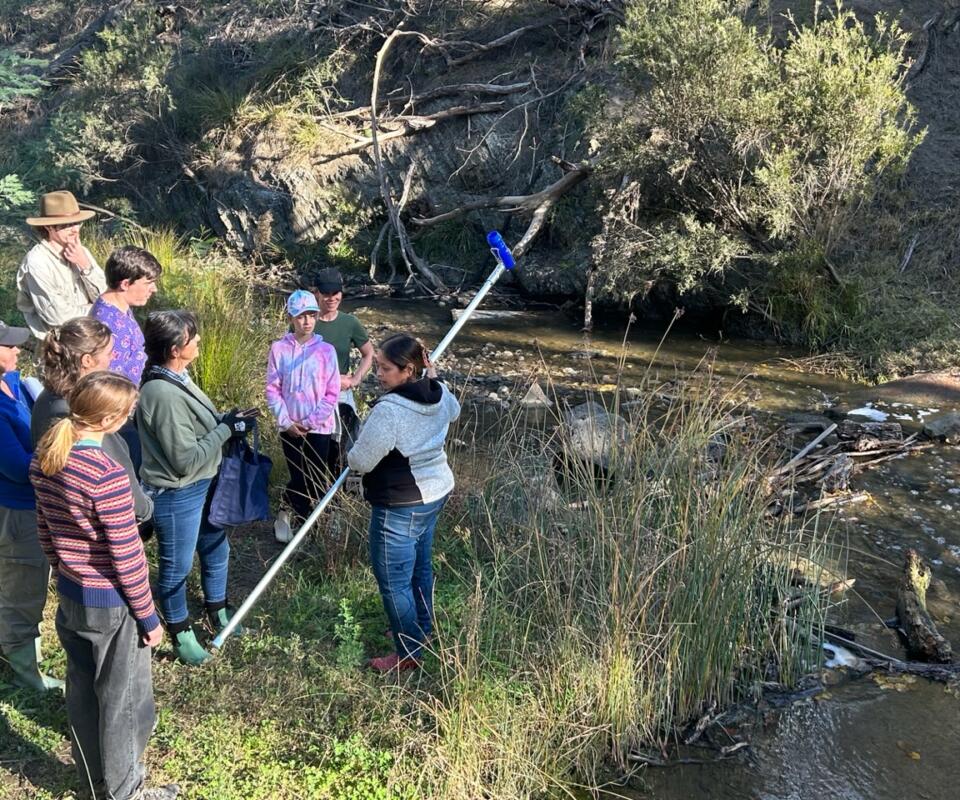
The Plenty River in north east Melbourne has a new WaterWatch group: The Plenty River Re-Wilding WaterWatch group! This group was started by a small but enthusiastic band of volunteers concerned about the water quality of the Plenty River in Greensborough. The Plenty River Re-wilding Project is a community-driven movement to restore the river’s natural balance and bring life back to its waters. By rewilding the landscape, the group are creating a thriving home for wildlife like platypus, birds like the gang-gang cockatoo and native flora while fostering a deep connection with nature.
Through hands-on action, shared learning, and the joy of making a difference, the group are building a healthier, wilder future—together.
MCMC WaterWatch (WW) was engaged by the Plenty River Rewilding group to establish a WaterWatch group on the Plenty River in Greensborough. Even though there was initially no funding to set up the group (funds are needed to employ the WaterWatch coordinator and for a WW testing kit) the group have managed to garner funds from Yarra Valley Water, Melbourne Water, and the Cities of Nillumbik and Banyule which is an amazing effort!!
The aim of the WW Water Quality (WQ) monitoring is to collect base line water quality (WQ) data and then continue monthly monitoring for at least 3 years in order to determine if recent bank revegetation works by the Friends of the Plenty River Walk, the Plenty River Rewilding group and others, has improved the water quality of the Plenty River at this site, in particular turbidity and phosphate levels after rainfall. The group will also act as a “first responder” to any major pollution spills or bank damage, including high nutrients, large muddy events or other point source pollution.
The group monitor on Sunday mornings at the historical Old Pipe Bridge, at a beautiful section of the Plenty River, along the Plenty River walk, Greensborough: https://ww-data.waterwatch.org.au/site/2310751
The Plenty River is an urbanised stream but it has retained many high ecological values, particularly upstream of Greensborough. Downstream of this site into the main part of Greensborough is where the negative impacts of urbanisation can really be seen. The Plenty River is home to vulnerable fauna species including the Platypus and the common galaxias, thus any revegetation bank works and community advocacy to continue to reduce point source pollution and the Urban Stream Syndrome will help ensure fish, platypus habitat and populations are retained.
So far the group has over 10 very active passionate volunteers and is growing. Besides monthly WQ testing, the group has also begun waterbug monitoring, habitat assessments and revegetation activities.
To join the group you can contact the group leader Seema Kanade seema_rknz@yahoo.com